Sheet A-01 · Section through a life
The story Omenka’s son
My father’s name meant a gifted craftsman. It was not a description anyone offered him out of politeness. He earned it in a workshop, with his hands, over a working lifetime.
Everything I know about engineering, I learned twice: once from him, in a workshop in Nigeria, and once again from codes, analysis and hard programmes. The second time only ever confirmed the first.
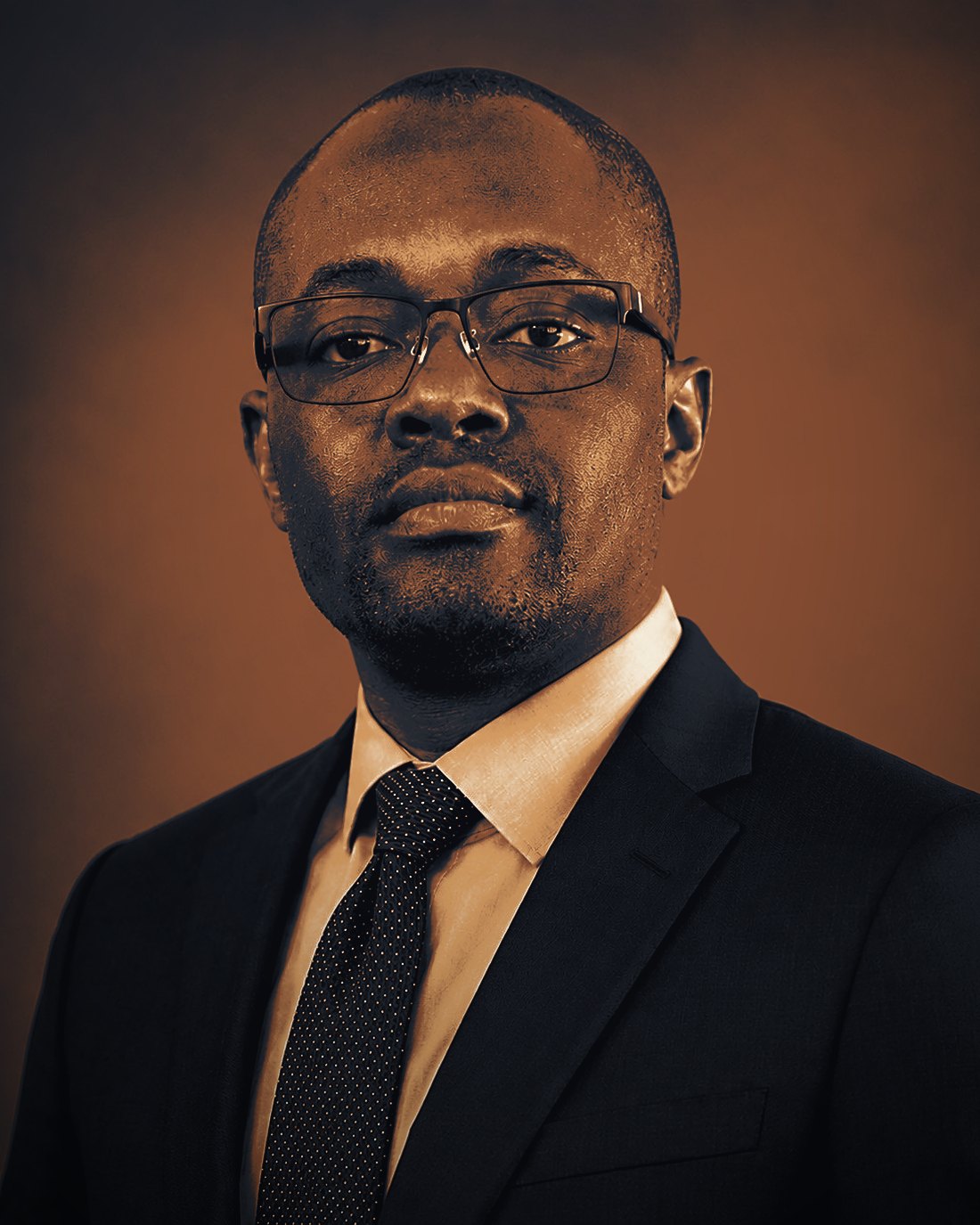
01 · The circle
He drew a perfect circle with his bare hand.
No compass. No template. No second attempt. He put a pencil on paper and a circle appeared, and if you laid a compass over it afterwards you would have struggled to find the argument.
I asked him how. He said:
It took me twenty years to understand that this was a complete engineering method and not a piece of folk wisdom.
Pin your hand — fix the datum. Choose the one thing that will not move and make everything else reference it. Let the mind do the spinning — hold the true form in your head and drive the hand from it, rather than chasing the line you have already drawn. Every good design decision I have made since has had that shape: establish the datum, hold the intent, let the geometry follow.
I still cannot draw the circle. I built an instrument that measures how badly I fail at it instead, which is a fairly complete description of becoming an engineer.
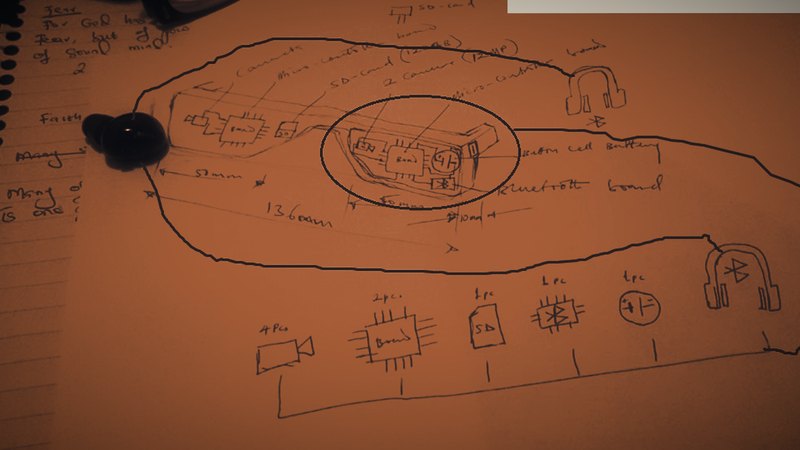
02 · The workshop
He took a child’s ideas seriously enough to build them.
This is the part I did not appreciate until much later. When I brought him an idea — and children bring you a great many bad ideas — he did not explain why it would not work. He put it on the bench and we found out.
So I learned the whole loop before I knew it had a name: you have an intention, you commit it to a shape, the material argues back, and you revise. I learned that a drawing is a promise to somebody who has to cut metal, and that the promise is either keepable or it is not. I learned that the cost of being wrong falls sharply the earlier you find out.
That is design for manufacture. It is also most of what I do now, at a different scale and with more consequences. When I sit in a design review and ask how a welder is supposed to reach that joint, or how an inspector gets a probe onto that surface, I am asking his question.
03 · The dark workshop
At seventy-five, he lost his sight.
He kept working.
He could still find every tool. He could still perform basic operations. Not because of some remarkable compensating gift, but because of something far more ordinary and far more instructive: his workshop had been kept in such rigorous order, for so long, that it no longer required eyes to operate.
Every tool had one place. Every place held one tool. He had spent a working life paying a small daily tax in discipline, and when the catastrophic failure came, the system he had built simply carried on running in a degraded mode.
I asked him, again, how. He said:
I work on systems that are required to behave when something has already gone wrong. Defence in depth. Graceful degradation. Single-failure tolerance. The entire discipline of safety-critical engineering is the formal, expensive, code-mandated version of what my father did to his workshop by instinct, for free, over a lifetime.
Order is not tidiness. Order is what you have left when a sense fails.
Four things I took out of that workshop.
Not a philosophy I adopted later to explain myself. The actual load path.
Fix the datum before you draw anything.
Most design arguments are not about geometry. They are about which surface everything else is allowed to reference, and they are unresolvable until somebody names it. I name it early, in writing, and I put it in the drawing notes so it survives me.
Hold the intent, not the last line you drew.
It is very easy to spend six weeks optimising a configuration that should never have existed. I keep the functional requirement in front of me and stay willing to throw away good work when the requirement says the shape is wrong.
Design for the day a sense fails.
Ask what happens when the instrument reads wrong, the operator cannot see in, the pump does not start, the weld has a flaw nobody found. Systems that only work when everything works are not systems. They are demonstrations.
The drawing is a promise to somebody holding a tool.
A model that cannot be fabricated, inspected, assembled or maintained is not a design, however good it looks on a screen. I keep asking where the hands go. It has never once been a waste of time.
Nnewi to a nuclear pressure boundary.
Thirteen years, five industries, two continents. Same method throughout.
Innoson Motors — Mechanical Design Engineer
Nnewi, Nigeria
Seven years designing truck bodies, vehicle components and fabricated structures in Siemens NX, on a line where the assembly floor was forty paces from my desk and every mistake came back the same week. Cut production time by twenty per cent through manufacturability work, and brought in Teamcenter lifecycle control for components and BOMs — which took thirty per cent out of development time and taught me that configuration discipline is not bureaucracy, it is the thing that lets a team grow.
SKF Group — Mechanical Designer / Validation Engineer
Calgary, Canada
A different order of precision. Rotary magnetic levitation bearings and neutron-chopper assemblies for high-speed compression and wafer manufacturing — machines where the rotor does not touch anything and the tolerance stack is the product. FEA, rotational performance testing, failure investigation. Production errors down twenty per cent by taking test data seriously rather than defending the design.
Intelligent Wellhead Systems — R&D Engineer
Calgary, Canada
High-pressure wellhead control and smart lockout devices for oil and gas. Twenty-plus prototypes evaluated in the first ninety days using CAD and additive manufacturing — my father’s bench, with a printer on it. Development time down twenty per cent, reliability up fifteen, largely by finding out fast instead of arguing slowly.
Westinghouse Electric Canada — Senior Mechanical Designer
Peterborough, Canada
In-bay equipment for handling and processing Cobalt-60. A radioactive environment nobody can walk into, so every maintenance action has to be designed before it is ever needed. CSA N285.0, ASME B31.3, ASME Y14.5. Ninety-five per cent on-time on design packages, and the first time I was formally responsible for other designers.
Solex Thermal Science — Mechanical Design Engineer
Calgary, Canada
Moving-bed heat exchangers and bulk material handling. Led a redesign that took sixty per cent out of manufacturing time while holding structural integrity, thermal performance and continuous-duty reliability — the single most satisfying number on this page, because none of it came from accepting a worse machine. ASME Section VIII, CSA B51.
Nano Nuclear Energy — Mechanical Design Engineer
United States
Advanced-reactor components for high temperature and multi-MPa pressure. Trade studies, detailed design, structural validation, and the interface and tolerance definition that lets a pressure boundary and its internals coexist without making inspection or assembly impossible.
Nano Nuclear Energy — Senior Mechanical Engineer
United States · current
Leading mechanical design of pressure-retaining and internal components for Micro Modular Reactor systems: first-principles load development, thermal and structural evaluation across creep, fatigue and thermal expansion, licensing-aligned design-basis content for PSAR inputs, and the repeatable design rules that keep a first-of-a-kind system consistent with itself.
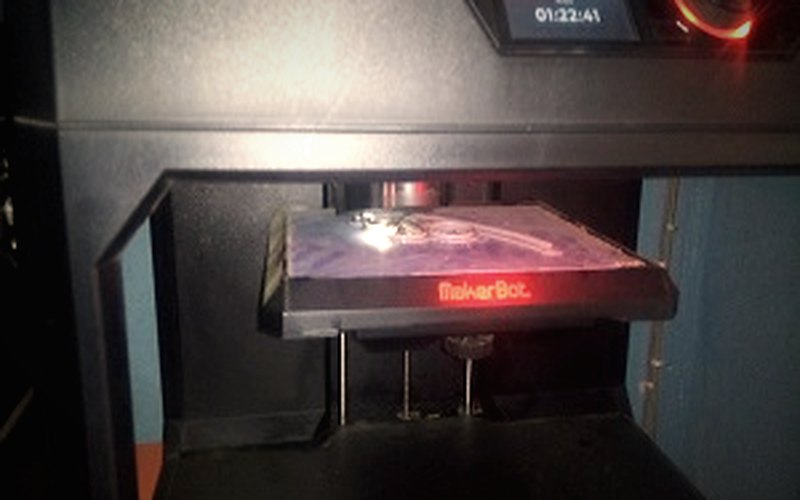
06 · Giving the workshop back
CoMakers Africa
I had a workshop as a child, and a man in it who would build my bad ideas with me. Almost nobody gets that. It is close to the whole explanation for why I am an engineer, and it was entirely an accident of whose son I was.
So we started an indigenous makerspace in a pre-urban area of Nigeria — training, physical space, and equipment for young people developing products, with places kept for those who cannot pay the membership. Not charity. A bench, tools, and somebody who takes your idea seriously.
What I hold, and what I hold it to.
Engineering
Codes & documentation
Tools & credentials
Working across Canada and the United States. Based in Calgary.
08 · Now
What I am looking for.
Problems where being roughly right is not good enough. Advanced nuclear hardware. Pressure equipment that has to be defended to a regulator. Resilient cooling infrastructure for data centres, where the thermal problem is genuinely hard and the availability requirement is genuinely absolute.
I am most useful early, when the geometry is still cheap to move and the requirements are still arguable, and I am useful again at the end, when something is not behaving and somebody has to work out why without guessing.
If that is your problem, tell me about it.