The number people remember is sixty per cent. The number that matters is the one next to it: zero. Zero reduction in structural integrity, thermal performance or continuous-duty life.
Any competent engineer can take sixty per cent out of a build time if they are allowed to give something back. The work is in not giving anything back.
Where manufacturing cost is actually committed
The bill arrives in the shop. The decision was taken in CAD, months earlier, by somebody who never saw the fixture.
Weld length. Joint preparation. Fit-up tolerance. Part count. How many times an assembly must be turned over. Whether a joint can be reached in the flat position or has to be done overhead. Whether a subassembly can be built on a bench or needs a crane and two people.
Every one of those is a drawing decision, and every one of them is nearly free to change while the model is still open and nearly impossible to change once the first article is in progress.
Which means design-for-fabrication review has to happen before the configuration is frozen. Held afterwards it is not a review, it is a correction exercise, and the answer to almost every finding is "too late for this unit."
The questions that produced the number
None of this was clever. It was systematically asking, feature by feature, whether the work being specified was carrying any load — structural, thermal, or functional.
- Does this joint need full penetration, or has it just always been drawn that way? Full penetration on a joint that carries no significant load is expensive preparation, expensive filler, expensive inspection and a heat input you then have to manage.
- Can this weld be made in the flat position? The same joint welded overhead costs multiples in time and carries a higher defect rate. Sometimes the fix is to move the joint. Sometimes it is to split the part differently so the assembly can be rotated.
- How many separate fit-up operations does this sequence require? Fit-up is frequently more expensive than welding, and it is almost never on anyone's estimate.
- Is this tolerance protecting a function, or protecting a habit? See the earlier note on Rule #1. Tight tolerances that nothing depends on are pure cost with a rejection path attached.
- Can this be one part instead of three? Or, sometimes, three instead of one, if that removes a handling problem or lets the pieces be made on equipment that is not the bottleneck.
- Where does the operator's hand go? If a fastener needs two hands and a third to hold the part, the shop will build a fixture you never drew and never costed.
Unglamorous, all of it. The sixty per cent was the sum of many small removals of work that was not doing anything.
Then prove you did not break it
This is the half that separates a redesign from a cost-down.
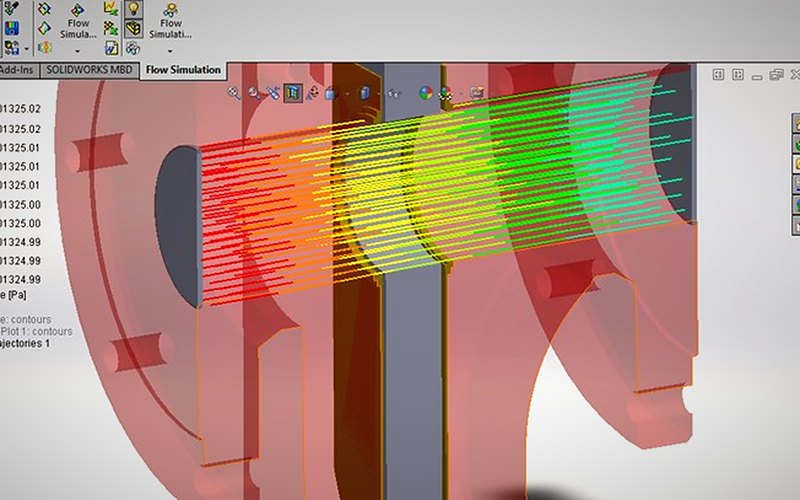
A cost-down finds savings and hopes. A redesign finds savings and then goes and demonstrates that the machine is still the machine. Every change went back through stress calculation, FEA and material selection, and against ASME Section VIII and CSA B51 for the pressure-retaining scope.
That loop is slow and it is not optional. The moment you allow a change through on the basis that it "obviously" does not affect anything, you have started guessing, and one of those guesses will be about the joint that mattered.
A useful discipline: for each change, name the failure mode it could plausibly affect, and say how you checked. If the answer is "none," write down why. Half of these take two minutes. The other half are the ones you needed to do.
Follow it to commissioning
I stayed with this equipment through supplier drawing and submittal review, shop inspection, test readiness, installation planning, and commissioning closeout.
That is not project-management diligence. It is the only way to find out whether your drawings were promises you could keep.
Engineers who never see their equipment commissioned repeat the same small mistakes for an entire career, because nothing ever comes back to tell them. The fabricator quietly works around the joint that could not be reached, the installer improvises a lift the drawing did not allow for, and none of it reaches the person who drew it.
The feedback loop is the education. Everything else is theory.
The thing I would tell a younger engineer
Go and stand where the work happens. Watch someone build what you drew. Do it early enough in your career that the lesson is still cheap.
My father used to put my ideas on the bench rather than explain why they would not work. The material argued back, and it was always a better teacher than he was — which I suspect he knew perfectly well.